
Philosophy Thoughts; Philosophy Talks - musings and mullings
Saturday, 14 September 2019


Sunday, 21 February 2016
philosophycave
For video clips of philosophical perplexities:
www.philosophycave.com
mind you,
the clownish face and bow tie
may generate an initial shock...
A Long Shot
The Dilemma - well, a pithy letter
For those of us eager for social justice and an end to the appalling inequalities in society, the EU referendum poses a genuine dilemma.
Were future UK governments to be by Corbyn or similar, we should surely leave the EU for we are then less likely to be so dominated by capitalist imperatives and undemocratic commissions.
Were future UK governments to be by Cameron and his ilk, then surely we need to stay within the EU as at least it offers us some protection from the Tory obsession with privatisation and the dilution of social welfare and human rights.
I suppose an optimist might argue that if the vote is to leave the EU, the Cameron government falls, the Tory party splits, and Corbyn comes to power – thus giving us what we want. True, that is a long shot.
Letter in The Guardian, 2nd February 2016
Sunday, 31 January 2016
Taxing tax?
Global corporations that make profits in Britain, yet pay negligible tax typically argue that they are acting within the law. No doubt that is true - well, often so.
Think of personal cases, though. Acting within the law does not let you off the hook when being greedy,
disloyal or passing by on the other side.
And so it is that contrary to the corporation defenders, compliance with corporate tax law does not thereby let the corporations off the hook
regarding their derisory tax payments.
After all, if your friends contrive
to avoid you, when owing you money, you'll not think much of them; and when these corporations, while reaping the benefits of a UK location, arrange their
affairs to avoid tax, well, what does that tell us of the ethos of those
companies?
True, one may argue that corporations are not persons and not liable to moral evaluation; but in fact corporations seek praise when they announce how they treat customers fairly or have given so much to charity or look after employees well - so, if those moral evaluations are acceptable, then also the condemnation regarding their tax avoidance ploys.
Friday, 1 January 2016
Cameron, Christmas and the New Year
1. Well, we know that David Cameron has form - when, for example:
he forgets which football team he 'avidly' supports;
and, quoting Corbyn out of context, disgracefully accuses Jeremy Corbyn of being a hater of Britain and someone who sees Bin Laden's death as a tragedy in contrast to the victims' deaths.
2. His latest gems have come from his Christmas and New Year messages.
(a) In his Christmas message, Britain, proclaims David Cameron, manifests Christian values of 'peace, mercy, goodwill and, above all, hope'. That sounds splendid, save for two mistakes.
First, Jesus was not consistently peace-loving - according to reports, for example, those who did not want him as king should be killed (Luke, 19: 27) - and some sincere followers of Christianity have hardly consistently manifested peace, mercy etc., but have forced conversions and also threatened many non-believers with eternal damnation. Of course, there are nuances and nuances.
Secondly, courtesy of Cameron's government, Britain's recent treatment of the poor neither manifests goodwill nor offers them much hope - as many will testify, suffering benefit cuts or disparagement at job centres and by the well-off as work shy.
(b) In his New Year message, Cameron condemns those who "shout into megaphones, wave banners and sign petitions".
So, were he to be consistent, he would be condemning, for example, the suffragettes, the various anti-apartheid and anti-racist marches - and, indeed, his friends who marched in favour of fox hunting.
He seems to forget that there is more to democracy than a dubious 'first past the post' electoral system that delivers government to those who received the support of only around 25% of those registered to vote and a much lower percentage of the total of those registered to vote combined with those who were eligible to register but did not do so.
3. We could add to the list the delivery of the knighthood to Lynton Crosby for his 'political service' which, I heard, was described as his 'contribution to democracy'. Now, did 'democracy' really benefit from that service and contribution?
Sigh, sigh, sigh
Saturday, 19 December 2015
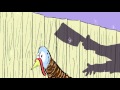
Humpty Dumpty advises Ms Turkey
For the advice to Ms Turkey, please right click on and 'open link in new tab':
Humpty_Dumpty advises Ms Turkey
Yet what does Humpty Dumpty mean?
For more, please right click on and 'open link in new tab':
The_Big_Think_Book: Discover Philosophy through 99 Perplexing Puzzles
Sunday, 8 November 2015
Ice cream preferences: how context matters
What flavours do you have?’ asks Lucinda, contemplating the homemade ice creams. ‘Chocolate, cherry and coffee,’ comes the reply.
Lucinda
ponders for a moment or two, not exactly happy with a choice so limited. ‘I’ll
have the coffee,’ she decides.
The
waiter takes her order, but as he turns to walk away, he remembers, ‘Ah, we
also have plum, peach and passion-fruit.’ ‘Splendid!’ says Lucinda. ‘I’ll go
for the cherry.’
?
We all have preferences, often different
preferences – and what we prefer depends on context, on the options available.
Now, the Lucinda story generates a smile of bafflement: how can knowledge of
the plum, peach and passion-fruit options lead her preference to switch from
coffee to cherry, given that she rejected the cherry earlier on? That seems paradoxical.
It does seem paradoxical; but we can tell a tale and the paradox vanishes. We hypothesize that Lucinda was initially unhappy with going for cherry, but only because it appeared to be the sole fruit flavour available. ‘Maybe the ice cream maker lacks expertise in flavouring by fruit,’ she pondered.
On
learning the availability of other fruits, Lucinda gained confidence in the
maker’s fruity abilities. With such confidence, she could go for her top
preference, namely, the cherry – but only when other fruits are available. Her
preference for coffee gains top place, when only one fruit is available.
Context affects her preference between coffee and cherry.
With
that background point to the fore, let us see if it helps with some preference
paradoxes and how we can ‘pump money’.
Extract from (right click): The Big Think Book
Saturday, 31 October 2015
One of the Ninety-Nine from THE BIG THINK BOOK
has a mini video and animation
right click the purple and open link in new tab or new window, please:
Maybe when 'tis best not to reason - poor Ass...

right click the purple and open link in new tab or new window, please:
Bales of Woe
Maybe when 'tis best not to reason - poor Ass...

Friday, 9 October 2015
Do we make the stars in the sky? Whatever are these things called 'time', 'love' and 'the self'?

Engaging philosophical perplexities, from the serious to the whimsical, The Big Think Book also introduces tales, whereby we meet Frog and Scorpion, Humpty Dumpty and Ms Turkey, Ant and Grasshopper, Sloth and Flutterby... not to mention some thoughtless Barbarians. The Big Think Book takes readers from
the wonderful to weird; from the funny to the provocative – and to very deep matters indeed.
With
the aid of tall stories, jokes, fascinating insights and common sense, the book offers a comprehensive survey of all areas of philosophy, addressing the
big questions in ethics and politics, aesthetics and logic, the emotions and
religion, knowledge and metaphysics… of reality.
Replete with a
smorgasbord of amusing and mind-boggling cases, this is perfect for delighting in life’s conundrums.

Saturday, 18 July 2015
ETHICS well, the animations may appeal, if not the burbles...?
To show some of the anguishes and thoughts in Ethics, I am seen burbling at the link below. Those burbles may well er....er....who knows what - but the odd animations after a minute or so could well appeal:

Buy to let - so, tie to 'let to buy'?
The British conservative government trumpets the importance of home ownership. It is so important that charitable housing associations are to be forced to
sell their properties at a discount to existing tenants. Well, let us reflect:
If property ownership merits such high
priority, why does the government not grant a “right to buy” against those who have “bought to let” a second property?
After all, thousands of people have bought second properties
purely as investments to secure rental income and capital growth. Private
tenants have little security of tenure, little control over rent increases and
have no share of the property value.
Therefore, if we must think in terms of property
ownership as being so important, then if anyone deserves the right to buy at a discount, it is those
tenants — or at the very least they deserve the right to a share in the
property’s increase in value.
What is, dare I say, sauce for the social tenant goose should
also be sauce for the private tenant gander.
International Finance: 'tis a wonderous thing
Well, I could not resist sending the following to the FT which kindly published it:
For the British economy to grow - and hence for Britain to reduce its debt - corporation tax must be lowered and people must not pay so much income tax.
For the Greek economy to grow, corporation tax must be raised and the people must pay more income tax.
We mere mortals can but marvel at the subtleties of our political masters in their understanding of matters financial - for the ways of the 'Market' are mysterious indeed to the unenlightened.
Thursday, 16 April 2015
PUZZLE; CREAMY PHILOSOPHERS: WHO KNOWS WHO KNOWS...
CREAMY PHILOSOPHERS
from Peter Cave’s Do Llamas Fall In Love: 33 Perplexing Philosophical Puzzles
Suppose ten philosophers, attending an international convention, are sitting in a semi-circle at
the dining table, having just finished some gorgeous creamy dessert in which they all delighted.
They can see everyone’s face, except their own. No mirrors, no squinting
allowed; and they are not permitted to confer. You are the draconian waiter,
gazing at them all.
No philosopher knows that he has cream on his lips; he
cannot see himself. Just two of them have, though, been messy eaters this time, their lips all creamy; the others, surprisingly,
are sparklingly clean. For ease, let us call those with cream on their lips ‘creamy’.
Naturally, all of them, being philosophers, are perfectly rational
reasoners – despite the flow of wine – ready to obey instructions. (Well, true, there is something a little 'out of this world' re this puzzle.)
You say to them, ‘Hands up all those who know that they are creamy.’
They
can all see at least one creamy philosopher. That there is at least one creamy philosopher is universally known,
mutually known. Not one of them, though, knows that he is creamy. So, no hands go up. Importantly, no hands go up, if
you ask the question again – and again. No philosopher can work out by reason
alone that he must be a creamy one.
Of course, they knew that in the first scenario: they could all see at least
one creamy philosopher. Your announcement, though, magically it seems, alters
what will happen.
You now instruct, ‘Hands up all those who know they are
creamy.’
No hand is raised.
You make the same demand again, ‘Hands up all those
who know they are creamy.’
Amazingly, the two creamy philosophers, and only
those two, do now put their hands up. Your announcement, yet of what they each
already knew, made all the difference.
Why did the creamy philosophers now raise their hands?
[This puzzle has a long history from unfaithful wives to muddy children.]
Monday, 6 April 2015
Thursday, 12 March 2015
Just published

Professor Ray Tallis:
‘Lucid, witty, erudite, and wise. This is more than a brilliant survey of ethical theories: it is an invitation to reflect on your life and to challenge your own settled views. This Beginner’s Guide will take you far from the place where you began it.’
Ray Tallis, Professor Emeritus of Geriatric Medicine, University of Manchester – Patron of Dignity and Dying, philosopher, author.
Professor Michael Clark
‘Rich, comprehensive and provocative,
with illustrative examples that are original and stimulating... altogether a
fine and authoratative introduction to the subject.’
Michael
Clark – Professor Emeritus, Philosophy, University of Nottingham; Editor of
Analysis
Professor Dan Cohn-Sherbok:
'With characteristic verve, Peter Cave
explores the key issues of ethics in this readable, entertaining, and
informative introduction. Surveying a wide range of topics – including
utilitarianism, existentialism and applied ethics – he challenges readers to
think their way through complex moral problems. For those seeking to make sense
of life's dilemmas as well as students enrolled in philosophy courses, this is
an ideal guide.'
Rabbi
Dan Cohn-Sherbok, Professor Emeritus of Judaism, University of Wales
Professor A C Grayling
'Peter Cave writes with clarity and humour; this is an excellent primer for anyone beginning the study of ethics. Highly recommended!'
A C Grayling, Master of New College of the Humanities, London, Fellow of St Anne’s College Oxford, formerly Professor of Philosophy, Birkbeck College London
Professor Andrew Pessin:
‘Peter Cave has done it again. Ethics:
A Beginner’s Guide is a must-read for any student of ethics, formal or
informal, beginner or advanced. It is thorough and complete, yet always
accessible and entertaining, written in Cave’s signature sharp style. With
plenty of intriguing examples and provocative thought experiments, with many
useful references drawn from literature, the arts, and real life, the book
masterfully guides the reader from the concrete up to the theoretical. It
begins with leading moral theories, then moves onto loftier discussions of
religion, existentialism, and human freedom, peaks with a survey of
meta-ethics—then re-descends to the debates over some of the most controversial
practical moral concerns of our day. Its final chapter is a literary tour de
force in itself, an extended meditation on the central role of moral
dilemma in the human condition. No matter who you are, no matter what your
background, this book will inform and challenge you — just as moral
philosophizing should.’
Andrew
Pessin, Professor of Philosophy, Connecticut College
Professor William Irwin:
Ethics: A Beginner’s Guide is a clear, comprehensive, and witty tour of the
terrain.
William Irwin, Professor
of Philosophy, King's College Pennsylvania
Sunday, 27 February 2011

Thursday, 28 October 2010
Wittgenstein
Arguably the greatest philosopher of the twentieth century is Ludwig Wittgenstein. For some pithy tweets by the anguished genius, try
http://twitter.com/WittTweets
http://twitter.com/WittTweets
Sunday, 19 September 2010
The Proms, Jerusalem and England's Green and Pleasant Land

In Britain, every September, there is a Last Night of the Proms - the end of the summer season of promenade concerts of classical music - and the tradition is to play Hubert Parry's 'Jerusalem', a setting of William Blake's poem. It is now something like an unofficial British national anthem. The poem speaks of
I will not cease from mental fight
Nor shall my sword sleep in my hand
'Til we have built Jerusalem
In England's green and pleasant land
Nor shall my sword sleep in my hand
'Til we have built Jerusalem
In England's green and pleasant land
With an inversion - and bearing in mind, to put it mildly, the tensions and troubles in the Jerusalem of the Middle East - bearing also in mind the famed toleration of Britain - a radical muse would be that of Britain, ideally as a secular state, retrieving some authority over Jerusalem, providing a relaxed and easy home for Jews, Christians and Muslims, to whom the city means so much, building indeed a Jerusalem of peace.
And, if we would like to speculate further, let that city in the Middle East be part of England's green and pleasant land.
True, few may support this wild speculative idea....
but wild speculative ideas may be required.
but wild speculative ideas may be required.

Sunday, 12 September 2010
Whose money
There is much ministerial and public indignation - understandably so - at public bodies having wild and extravagant expense accounts, with higher management being taken on luxurious jaunts, staying at five-star hotels - and often receiving large salaries and larger bonuses. After all, the money is 'taxpayers' money'.
The same indignation is rightly held when confronted with certain bankers and investment managers receiving large bonuses and pay-offs.
Curiously, though, the vast number of commercial bodies escape censure. Yet, of course, many large businesses cover the expenses of directors and upper management, expenses when staying in the top hotels, taking lavish meals, travelling in luxury. Why the difference in attitude?
'Ah,' it may be said, 'the money being spent is not taxpayers' money.'
But, hold on, where does the money come from? Well, from consumers - and much of the consumption, in practice, is not optional. Further, many, many consumers are far less well-off than those with their large expenses - indirectlly being paid by - those consumers.
Subscribe to:
Posts (Atom)